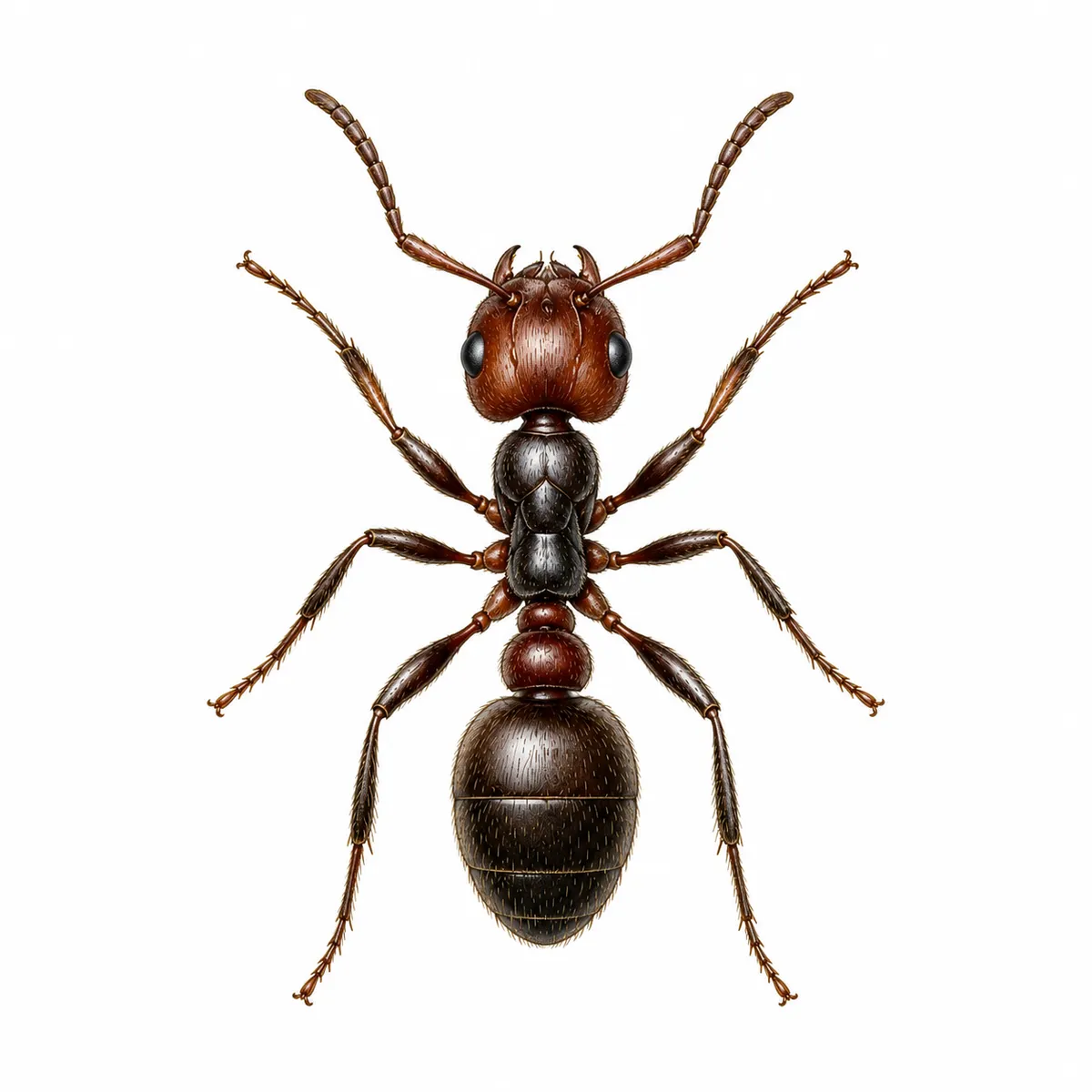
Earwigs at Home and in the Garden in Warsaw — Are They Dangerous and How to Get Rid of Them
The pincers at the end of their abdomen look intimidating, but these insects are mostly harmless — we look at when it's worth acting in Warsaw and the surrounding area.
What are earwigs and when are they a problem?
Earwigs look intimidating because of the characteristic pincers at the end of their abdomen — but in reality, they're mostly completely harmless.
Not venomous
The pincers are used for defence and catching prey, not for stinging people.
Rarely attack people
They avoid contact and flee when they sense danger.
Can damage plants
In large numbers, they feed on young shoots, leaves and flowers in the garden.
Enter the home by accident
They look for damp, dark hiding spots — basements, bathrooms, plant pots.
How to recognise earwigs
Watch out for the following signs:
- Elongated, brown insects with characteristic pincers at the end of the abdomen
- Most often seen in the evening and at night, hiding during the day
- Damage to leaves, flower petals or young shoots in the garden
- Presence in damp spots — under plant pots, stones, in gutters
- Individual insects entering the home through window or door gaps
How do we reduce the number of earwigs?
We match the method to the scale of the problem — in the garden or inside the building:
Barrier sprays
Limit earwigs entering the building from outside.
Sealing entry points
We block gaps in windows, doors and foundations.
Removing damp hiding spots
Piles of leaves, boards and stones near the building favour their presence.
Reducing moisture
Drying out basements and utility rooms reduces the habitat's appeal.
Guarantee on the treatment
- Spray or ULV fogging — guarantee up to 3 months after the first treatment
See the treatment results
Drag the slider to see the difference before and after a professional treatment:
How much does earwig control cost?
The price depends on the method and the size of the property (KŁP = kitchen, bathroom, hallway). 10% discount with the password “BLACK”, for regular customers and for referrals — mention it when booking, not on site.
Travel within Warsaw and the sanitary hygiene report are included; travel outside Warsaw: 3 zł/km, minimum 100 zł.
Pressure spraying
Most popular choice
Guarantee up to 3 months after the 1st treatment
Precise application of insecticide directly where the insects live — crevices, skirting boards and hidden corners. The technician may change the guarantee terms on site, e.g. for a very advanced infestation.
from 300 zł
for KŁP
ULV fogging
Most effective
Guarantee up to 3 months after the 1st treatment
Dispersal of the product as a microscopic mist that reaches the smallest crevices. The technician may change the guarantee terms on site, e.g. for a very advanced infestation.
from 300 zł
for KŁP
Businesses and commercial premises
50% guarantee for up to 3 months
Hotels, hostels, schools, shops, houses and businesses — priced by floor area.
from 300 zł
up to 25 m²
Online consultation
Pest identification and specialist advice based on photos or a description of the problem.
from 100 zł
On-site consultation
Inspection, identification of the pest, and assessment of how far the infestation has spread. For large properties the quote is free or included in the consultation.
from 200 zł
Did you know...?
Do you really need to worry about them?
0%
of the earwig population in a garden feeds on plant debris and other small insects — only a small part causes real damage to crops.
How to prepare the garden and house for the treatment?
For the treatment to be fully effective, prepare the surroundings following our tips:
Remove piles of leaves and boards
Reduce natural hiding spots near the building.
Check windows are sealed
Makes it easier to install protection against them entering.
Reduce excessive watering
Lower soil moisture around the foundations.
Tidy up the basement and utility rooms
Make potential hiding spots accessible to the technician.
Earwig or young cockroach? How to tell them apart
Earwigs are sometimes confused with other insects that cause concern — here's how to recognise them:
| Earwig | Cockroach (nymph) | |
|---|---|---|
| Appearance | Elongated body with pincers at the end of the abdomen | Oval body, no pincers, longer antennae |
| Health risk | None — doesn't spread disease, doesn't bite people | Can carry bacteria and allergens |
| Living environment | Garden, damp hiding spots, rarely inside buildings | Warm, damp interiors — kitchens, bathrooms |
| Scale of the problem | Usually individual, stray insects | Can indicate an established colony |
Earwig control across all of Warsaw
We respond to earwig callouts across every district of Warsaw — houses with gardens in Wawer, Wilanów and Białołęka, as well as flats in Mokotów or Wola — as well as towns near Warsaw, such as Piaseczno, Józefów or Otwock.
Why choose us?
25 years of experience
Hundreds of successfully completed treatments.
Safe methods
Products safe for people and pets.
Effectiveness guarantee
We guarantee the services we carry out.
Fast response
We act quickly across all of Warsaw.
Discretion
We work discreetly and professionally.
Frequently asked questions
Earwigs can gently pinch with their pincers in self-defence, but they're not venomous and pose no risk to human health.